.svg)





SaaS sales jobs are highly desirable and sought after. You begin with startups and climb into enterprise sales with plenty of upward career mobility and extraordinary earning potential. It’s an exciting career— but it’s also a competitive one.
So, if you’re trying to figure out how to get into SaaS sales but don’t have the experience yet, knowing how to break into the industry is key.
Key Takeaways
- SaaS sales offers high earning potential and fast career mobility, but it is competitive and demands comfort with rejection.
- You do not need prior SaaS experience to break in. Any sales, client-facing, or high-ownership background can translate with B2B training.
- Most people start as an SDR, then move to Account Executive, and from there into enterprise sales, management, or enablement.
- In 2026, AI handles much of the manual prospecting that used to define the SDR role, so employers now hire for judgment, conversation quality, and the ability to work alongside AI tools.
- Pay scales steeply with role: SDRs average roughly $58K base (about $85K OTE), while enterprise account executives report median OTE near $275K.
- The fastest way in is to build core B2B skills, quantify your results, network hard on LinkedIn, and follow up with hiring managers directly.
The Changing Landscape in 2026
The path into SaaS sales looks different than it did even two years ago. AI tools now handle the bulk of manual prospecting: list building, data enrichment, sequencing, and the first-touch outreach that used to fill an SDR’s day. That has not erased entry-level sales jobs, but it has raised the bar for what gets you hired.
Employers used to reward high activity. They counted dials and emails. In 2026 they screen for things that are harder to automate: commercial judgment, the ability to hold a real conversation without a script, and fluency with the AI tools that now sit underneath the workflow. The profile has shifted from high-volume executor to sharp, tech-enabled prospector.
A few practical implications if you are breaking in now:
- Learn the tools. Comfort with AI prospecting and conversation-intelligence platforms is now a hiring signal, not a nice-to-have.
- Lead with judgment. Show you can research an account, form a point of view, and start a conversation that earns a meeting.
- Expect fewer, more selective entry roles. Some teams have thinned their SDR ranks, so standing out matters more than ever.
- Watch the new titles. Roles like GTM Engineer, which build automated plays that react to buying signals, are opening a fresh door into revenue teams.
The fundamentals in this guide still hold. What changed is the emphasis. The reps getting hired in 2026 pair old-school sales instincts with new-school tooling, and they prove it with specifics rather than enthusiasm.
Pros and Cons of a Software Sales Career
If you’re considering a SaaS sales role, you’ll want to take a look at these pros and cons to make sure that it’s a good fit for you.
The Pros:
- You can join a startup and learn fast. In many cases, startups are going to be a great place to break into a SaaS sales career. Many products are relatively easy to learn, and many of the sales skills are, too— especially with the right tools and sales training courses.
- You can work directly with founders and CEOs. There are few jobs where you can join a company as an entry-level worker and work directly with high-level executives, but this is one. The networking and growth potential from this alone is significant.
- Tech sales has high earning potential. SaaS sales pay scales well into six figures once commission is included. Experienced account executives report median on-target earnings around $200,000, and enterprise sellers report medians near $275,000 (RepVue, 2026).
- It’s a skill you will have forever. Once you learn B2B sales skills, those are yours to keep— and they transfer well to other areas, too. You can move to larger companies, switch roles, or even use the sales experience to launch your own company down the line.
- Many startups have solid working benefits. SaaS startups and tech companies are more likely to be up-to-date on “modern” working practices, like remote work or flexible time-off compared to other industries.
- Tech sales jobs are (relatively) recession-proof. If the economy takes a down-swing, some areas of a business may be cut back, but that’s unlikely to happen with sales teams. SaaS companies know that if they cut their sales teams, their profit plummets quickly, giving your job a layer of protection even during tough times.
The Cons:
- Very competitive. Any great career will be competitive, and SaaS sales is no different. It can be challenging to break into, but this guide will help with that.
- Demanding career. Sales is a performance-focused career, which means you need to deliver. You’ll typically have sales goals that must be met, which can be a high-pressure environment.
- Entry level can be low paying. While there’s plenty of great earning potential for B2B sales jobs, you’ll start off on the low side, often under $60,000. Consider it as an investment for long-term high earning potential.
- Must be comfortable with rejection. There’s no way to get around it— you’ll hear a lot of “no” as a sales rep no matter how great you are. This can be demoralizing, so you need the right personality fit.
- You will start off doing lead generation. Before you start leading sales demos, you’ll almost definitely start out as a Sales Development Representative (SDR) that will be responsible for lead generation. It will take some time to work your way up.
Is prior sales experience necessary to land a SaaS sales role?
It’s the classic Catch-22 of any career: To break into the SaaS sales industry, you need experience, but what if you’re just starting out and don’t have any?
The good news is that you don’t always need SaaS industry experience. If you’ve worked any sales job in the past, even as a retailer worker in a small store, many of the skills do translate— you’ll just need B2B specific training.
And even if you don’t have sales experience, that’s okay, too. There are entry-level opportunities, especially for enthusiastic candidates with great people skills. That being said, internships and apprenticeships can definitely help.
Anything that demonstrates someone’s ability to take massive ownership of a role will increase their odds of landing a tech sales job, so keep that in mind. And remember that even if you're struggling to get into SaaS sales, you may have luck getting into other entry-level roles like customer service and, once you know the product well, letting the team know you’d like to work to move to a sales position.
Common Career Paths for SaaS Salespeople
While many sales reps have diverse backgrounds that lead them to their SaaS careers, there are a few common career paths once they’re working in the industry. You’ll typically start as an SDR and work your way up to an account executive, after which you may move on to management, enablement, or even executive positions— if you want to.
Sales Development Representative (SDR)
SDRs find new leads through prospecting. They’ll use online databases and platforms like LinkedIn Sales Navigator to identify prospects that match the company’s target audience, and then they’ll reach out using cold calling, cold emails, and other types of outbound prospecting.
This is considered a relatively entry-level position for a sales career path— most reps in tech sales start their career in business development as a business development rep or a SDR.
Account Executive
SaaS sales account executives spend most of their time nurturing leads through the sales pipeline. Essential job roles typically include the following:
- Qualifying leads to see if they’re an ideal customer profile (ICP) fit
- Sending follow-ups before and after sales demos to keep leads engaged
- Running sales demos that educate customers about your product (and convince them to purchase)
- Answer customer questions
- Build relationships with leads and network referral partners
- Closing deals using a variety of different sales strategies and closing techniques
- Maintain relationships with customers after the deal is closed to improve retention and potentially drive upsells and cross-sells
Working as a sales account executive does typically require some sales experience, which is why starting out as an SDR is a great idea.
Enterprise Sales Executive
Enterprise sales executives (also sometimes called “strategic account executives”) are similar to account executives, but they’re typically more experienced and are working exclusively with incredibly high-value or “Tier 1” companies.
Enterprise sales executive roles are more tenured than any other in SaaS businesses, and are reserved for the upper echelon of sales professionals who have proven that they can consistently deliver. These positions are highly sought-after and well-respected.
Sales Manager
Sales managers are responsible for (you guessed it!) managing and training their teams, ensuring they have everything they need.
Their main job duties include the following:
- Training and providing sales coaching to their teams
- Hiring new sales reps
- Identifying potential issues resulting in lost sales
- Teaching and driving sales strategies
- Ensuring their team has what they need
- Reporting to the Chief Revenue Officer (CRO)
Sales managers typically must have 3-5 years of hands-on experience before becoming eligible for the role.
Sales Enablement
Sales enablement roles are high-level roles that you’ll typically find in growing and larger companies. Their entire purpose is to help the sales team have what they need to excel in their roles.
Main job responsibilities of a sales enablement career include:
- Assisting sellers in their Sales Processes
- SaaS training and program development or selection
- Developing processes for and managing sales tech stack, including tools like Outreach and Salesforce
- Driving effective sales team onboarding and overseeing the training of new reps
- Nurturing relationships between sales and marketing for increased alignment
How Much Can You Earn Selling SaaS?
One of the best parts of a B2B sales job is the high earning potential. Even “entry-level” positions like SDRs have a solid average starting pay compared to some other industries.
Here is what each role pays in 2026, based on current data from Glassdoor, Built In, RepVue, Founderpath, and the Sales Enablement Collective. Base pay and on-target earnings (OTE, which is base plus commission) are listed separately, since commission is where SaaS sales pay really scales.
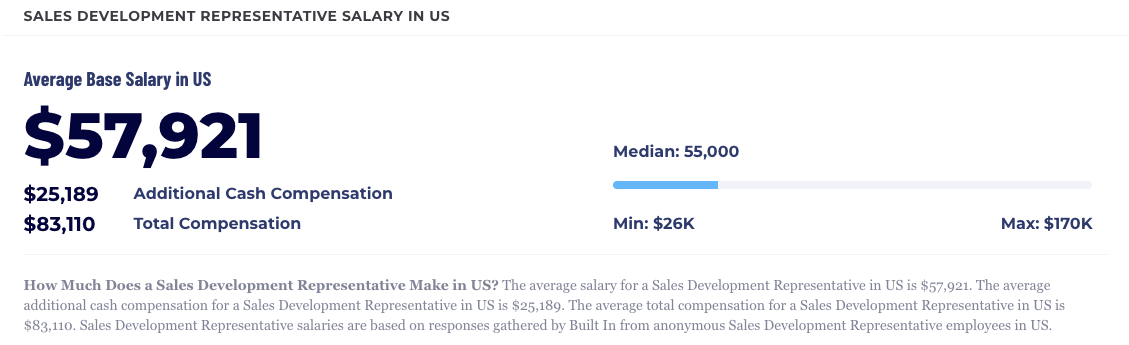
- SDRs earn an average base around $58,000 (Built In), with median on-target earnings near $85,000 once commission is included (RepVue).
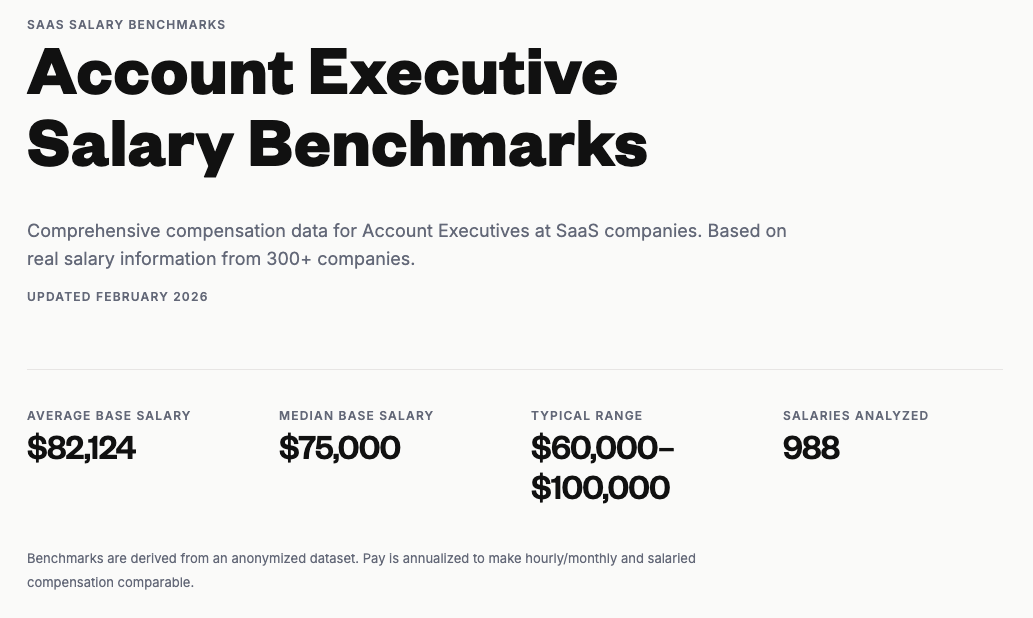
- Account Executives earn an average base around $82,000 (Founderpath), with median OTE near $200,000 reported on RepVue. Early-career and SMB AE roles more commonly land between $90,000 and $140,000 OTE.
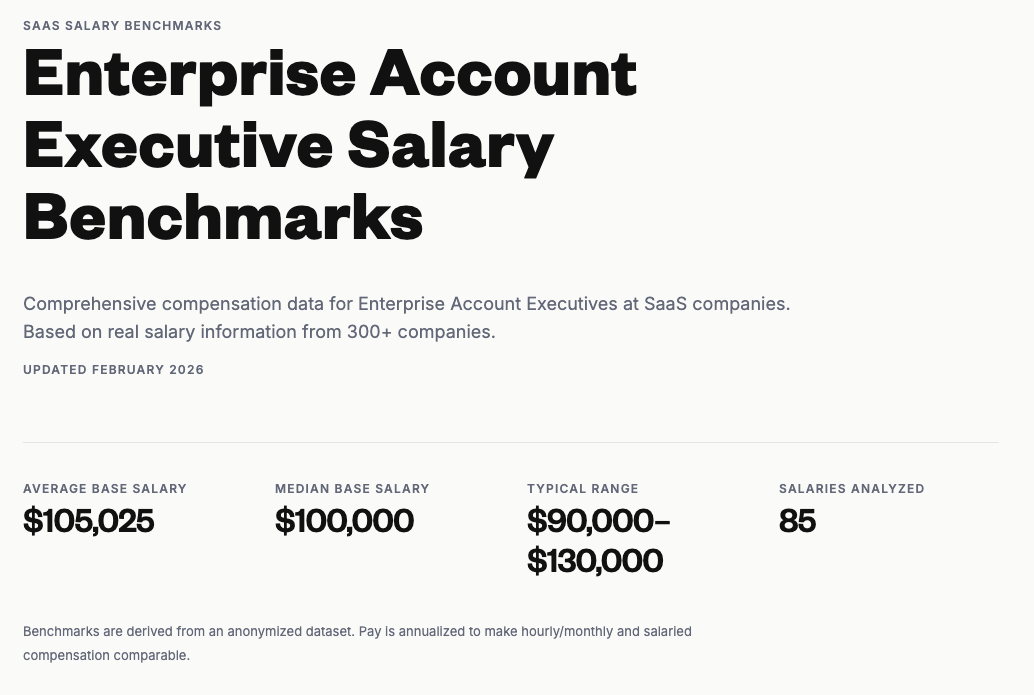
- Enterprise Sales Executives earn an average base around $105,000 (Founderpath), with median OTE near $275,000 (RepVue) and top enterprise plans reaching $400,000 or more.
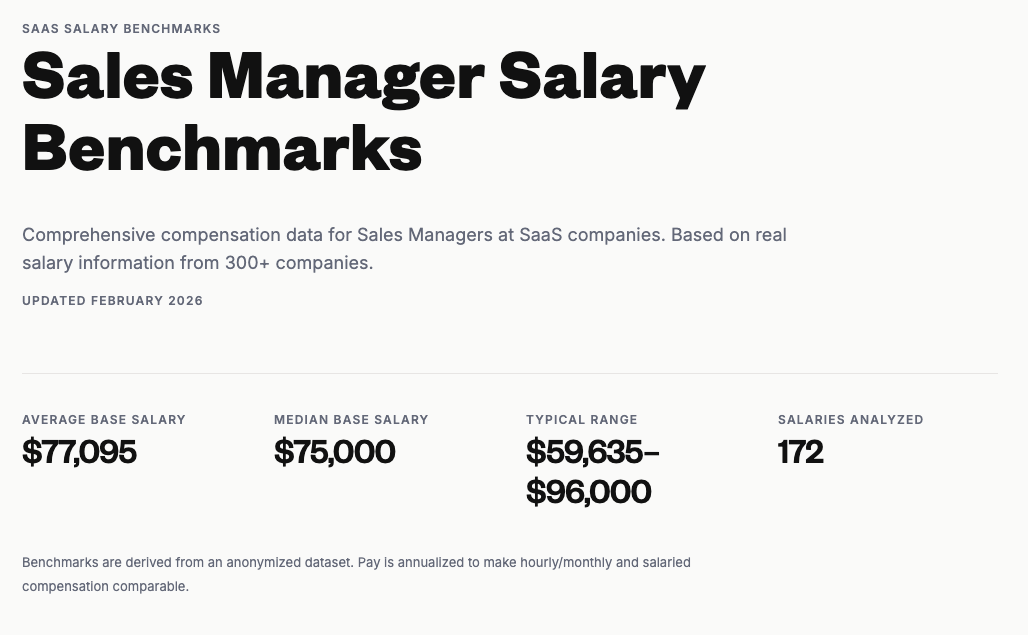
- Sales Managers earn an average base around $76,000 in SaaS (Founderpath), with total on-target earnings of roughly $150,000 to $250,000 at tech and SaaS companies (Everstage).
- Sales Enablement roles pay around $117,000 on average (Glassdoor), ranging from about $76,000 for entry-level roles to roughly $190,000 for directors (Sales Enablement Collective).
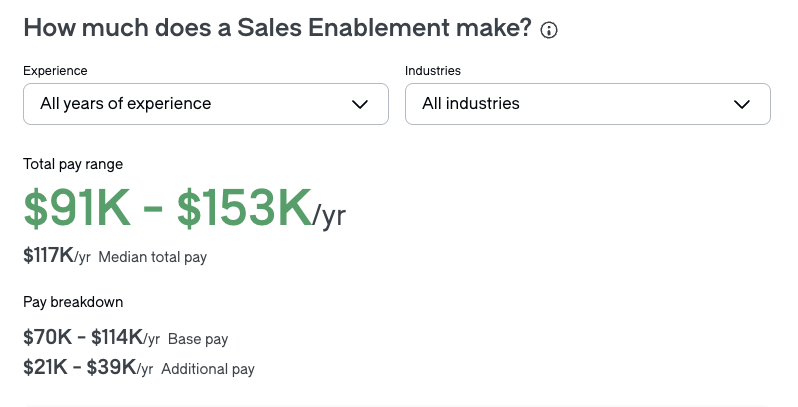
Pay varies widely by company stage, location, deal size, and quota attainment, so treat these as benchmarks rather than guarantees. A large share of SaaS sales comp is variable, which is why strong performers at fast-growing companies often earn well above these midpoints.
How To Actually Get a SaaS Sales Job
You know you want to work in SaaS sales, but now you need to know how to actually land the job. You need to start by building the right B2B sales skills, and then finding a job opportunity that’s a great fit. You can do that by following these 7 steps.
1. Master the SaaS Sales Funnel
The SaaS sales funnel is the sales process your sales team will follow to identify, nurture, and convert prospects into customers.
These are the SaaS funnel stages you need to know:
- Prospecting. Your sales team (and often your SDRs specifically) seek out potential leads that align with your ICP. They’ll use customer databases, social media, and account-based marketing tools to create lists of potential prospects and begin the outreach process.
- Discovery. Your sales team reaches out and begins to nurture a relationship with potential leads. You’ll explain how your product can solve specific problems they have. Demos are common during this stage of the SaaS sales process.
- Negotiation. When all the key stakeholders and decision-makers are on board, they may negotiate a contract with you. The negotiation can include add-on features, pricing, usage, and number of users.
- Closing. The deal closes, and everyone signs on the dotted line. Payment is processed, and you have a new customer.
Understanding strategies and processes you can use at each stage of the SaaS sales funnel can increase the number of leads you successfully move through the pipeline. Educate yourself about the sales funnel, as well as a standard buyer’s journey.
2. Cultivate The Essential B2B Sales Skills
There are certain sales skills that SaaS and B2B hiring managers look for. These include the following:
- Product knowledge. If you’re familiar with the product type, that’s already a huge advantage. No tech company wants to hire a salesperson who can’t explain how their basic tool works or what problems it solves. Do your research in advance.
- Business acumen. Are you able to hold your own, understanding and handling different business situations? Insight into business operations, strategies, and processes matter.
- Active listening. The ability to listen to a customer, actively understand what they’re saying, and make them feel heard is essential for sales teams. If you can’t pay attention, ask qualifying questions, and assure the customer you grasp their needs, you won’t name a sale.
- Consultative selling. No one wants to be “sold at.” Consultative selling is the practice of acting more like an advisor than an aggressive sales rep, where you help customers make smart buying decisions for their needs. This is a vital aspect of SaaS sales today.
- Outbound prospecting. How effective are you at finding prospects, reaching out to them, and getting them into your pipeline? Knowing outbound strategies is key.
- Cold email copywriting. Some customers prefer cold call outreach, while others respond better to cold emails. Your copywriting skills should be strong enough that you can explain how you can help the customer and convince them to get in touch for more information.
- Cold calling. Cold calling is a vital skill for SDRs and salespeople alike. Having cold calling strategies (and maybe a few scripts) on hand can help you feel confident enough to get results.
- Sales negotiation. SaaS sales often involve some negotiation. Embracing “wiggle room” is great, but you want to maximize the dollar amount of those closed deals. Negotiation skills— including knowing when to bend and how much to give— are key.
- Account-based selling. ABS is the practice of adjusting your selling strategies based on the specific customer account in question. Customize your sales pitches, demos, offers, and negotiations based on the lead you’re dealing with. This involves heavy research in advance.
- Social selling. Leveraging social media to find and attract potential leads is a valuable skill set. You can also use it to nurture relationships with existing leads, build social proof, and drive referrals.
Some B2B sales skills come with experience, but training for advanced sales and negotiation strategies can be key. Our Sales Discovery Masterclass can help with that.
3. Understand Crucial SaaS Metrics
SaaS metrics are fairly easy to grasp, so you’ll want to be armed with this knowledge before you make your way into an interview.
Know the following SaaS metrics and terminology:
- Customer lifetime value (CLTV)— What customers are worth to your business through their entire lifetime
- Customer acquisition cost (CAC)— The total average cost of acquiring new customers
- CLTV:CAC ratio— Customer lifetime value compared to your customer acquisition costs
- Churn— How quickly customers are leaving your business and not returning to purchase again
- Monthly recurring revenue (MRR)— The amount of revenue you generate every month from existing customers
- Annual recurring revenue (ARR)— Amount of revenue you generate annually from existing customers
- Average selling price— The average price you sell specific products for
- Closed/lost rate— The number of deals you’ve closed compared to those that you’ve lost
- Click-through rate (CTR)— The number of users who saw a specific touchpoint and clicked on it
- Net Revenue Retention (NRR)— A SaaS business’s capacity to maintain and increase revenue from existing customers
4. Showcase Your Numbers
Being performance-driven when applying to companies is what will help you land a job. Whatever you were previously doing (whether an entry level job or internship) — be specific in your numbers and let your numbers tell your story.
- Your resume should direct attention to your achievements and speak in numbers.
- How much did you exceed your quota? What were your average contract values?
- How many dials did you do daily? How many meetings did you set daily?
- How long was your sales cycle? Did you regularly exceed targets?
When you land an interview, brush up on these numbers in advance. You’ll want to talk about what strategies and processes you used to meet your quotas and how they helped to demonstrate sales experience.
5. Get on LinkedIn and Network Like Crazy
Social proof is everything. Work hard to build it. Connect with as many mentors, peers, recruiters, hiring managers, directors and VPs as possible.
Make a list of companies that you’d like to work for. Send an InMail message on LinkedIn to the sales managers of those companies, letting them know you’d love to connect as a salesperson in the field. You can nurture relationships over time.
Post content, engage with everyone you connect with, and be active. Being consistent on the platform will help you attract a following and catch the attention of potential recruiters and hiring managers alike. If people like you before it’s time to hire you, that’s a good start.
6. Follow Up With Every Hiring Manager After You Apply
You apply for a job online. That’s a great start, but don’t leave it there.
You must find the hiring manager’s profile on LinkedIn and send a message letting them know you applied. A quick sentence or two about why you’re excited and think you could be a great fit will help you stand out and can catch their attention.
Just applying does nothing for you. Be proactive and be hungry. This is the only way to land a job in such a competitive field— especially since hiring managers are looking for sales skills (including cold outreach!).
7. Ask The Right Questions During Your Interview
When you’re at the interview, answering questions to the best of your ability is great— but asking the right questions can also help you gain favor with hiring managers.
These are the questions you should always ask, as they demonstrate an understanding of a SaaS sales process and show you’re invested in the business:
- What is the sales team's typical sales cycle, and how long does it take to close deals?
- What is the current ratio of inbound vs. outbound leads for the company’s sales pipeline?
- What sales tools, apps, or CRM systems does the company use?
- What sales goals or quotas will I be expected to meet, and how are they measured?
- What does the sales team culture look like here? Are there any other stakeholders involved in the interview process?
- How does the company stay competitive in the market, and what sets it apart from competitors?
- What are the next steps in the interview process, and when can I expect to hear back?
{{cta2}}
SaaS Sales FAQs
Still have SaaS sales career questions? We’ve got answers. Check them out.
Can you get into SaaS sales with no experience?
Yes, and people do it every year. SaaS companies care more about raw ability than a perfect resume. If you have any sales, retail, hospitality, or client-facing background, much of that translates directly: you already know how to handle objections, read a room, and stay composed when someone says no.
If you have no sales experience at all, you can still break in by showing ownership and hustle in whatever you have done. Hiring managers look for coachability, work ethic, and genuine curiosity about the product and the buyer. The most common entry point is the Sales Development Representative role, where the job is to start conversations, not close deals. Stack a few B2B fundamentals, learn the product category, and quantify any results you can point to. Do that and you will compete well against candidates who have titles but no drive.
Is AI replacing entry-level SaaS sales jobs in 2026?
AI is changing entry-level sales work, not erasing it. Tools now handle the repetitive parts of the SDR job: building lists, enriching data, and sending first-touch sequences at a scale no person can match. What they cannot do is exercise judgment, build trust, or run a conversation that adapts in real time.
That is where you still get hired. The catch is that the bar is higher than it used to be. Teams that once rewarded sheer activity now want reps who think strategically about which accounts to pursue and who can talk to a buyer without leaning on a script. Some companies have trimmed SDR headcount, so competition is tighter. The reps winning offers in 2026 treat AI as leverage: they let it handle volume while they focus on the human parts of selling that actually move deals forward.
What qualifications do you actually need for a SaaS sales job?
There is no required degree or certification for SaaS sales, which is part of what makes it accessible. Hiring managers screen for a short list of things: communication skills, evidence that you can handle rejection and keep going, basic comfort with sales tools and CRMs, and enough curiosity to learn a product and its market quickly.
Any client-facing or sales experience helps, even if it is not in tech. Beyond that, they look for self-starters who take ownership without being told twice. You can close gaps fast by learning core B2B skills like discovery, cold outreach, and consultative selling through a focused training program. If you keep getting rejected, start by applying for SDR roles rather than account executive roles, since SDR is the designed entry point and the expectations match someone early in their career.
How do I find SaaS sales job openings?
Use more than one channel and work them consistently. Job boards like LinkedIn, Built In, and Wellfound list SaaS sales roles daily, and applying broadly to relevant SDR postings is a reasonable start. But applications alone rarely get you hired in a competitive field.
The candidates who break in fastest treat the search like a sales pipeline. They build a target list of companies they want to work for, find the hiring manager or sales leader on LinkedIn, and reach out directly with a short, specific note about why they fit. T
hey also build relationships with recruiters who specialize in tech sales, since recruiters often know about roles before they are posted. Set a weekly cadence for applications, outreach, and follow-up, then track it like a quota. A direct, persistent approach beats raw volume every time.
How much can you realistically earn in SaaS sales?
More than most careers that do not require an advanced degree, but it builds over time. Entry-level SDRs average around $58,000 in base pay, with on-target earnings near $85,000 once commission is included.
The real money arrives when you move into closing roles. Account executives report median on-target earnings near $200,000, and enterprise sellers report medians around $275,000, with top performers on uncapped plans earning well beyond that. Management and enablement paths land in the $120,000 to $250,000 range depending on company stage.
The important nuance is that a large share of SaaS sales pay is variable and tied to hitting quota. Strong reps at fast-growing companies can earn far above these benchmarks, while a slow quarter pulls take-home down. Treat these numbers as midpoints that reward the people who consistently perform.
I keep getting rejected from applications — what qualifications are essential for SaaS sales reps?
Most SaaS sales hiring managers and recruiters typically look for the following qualifications:
- Sales or client-facing experience
- Technical knowledge or product knowledge
- Market industry awareness
- Experience using sales tools or CRMs
- Strong communication skills
- Persistent self-starters
- Good team players
Starting by applying for SDR positions is often a good choice.
How do I find job opportunities with SaaS companies?
You can find job opportunities with SaaS companies with these strategies:
- Reach out to recruiters
- Check job board sites and apply to all relevant positions
- Build a network on LinkedIn and reach out to sales teams and hiring managers
- Network with SaaS founders on LinkedIn
- Look at Careers pages of SaaS brands you’re interested in
How can LinkedIn help me in my SaaS sales job search?
LinkedIn is one of the best job-searching platforms out there— especially for SaaS sales. You can network with SaaS hiring managers, recruiters, and even founders so that you’ll be at the top of their mind when a position opens up.
You can also keep an eye out for postings asking for recommendations for SDRs and sales reps, and browse the job search page for relevant positions.
Do recruiters play a significant role in hiring for SaaS sales positions?
Recruiters can play a role in hiring for SaaS sales positions— it depends on the company and their hiring structure. They work hard to pair the right candidate with the right job fit, so being open to recruiters can be a good way to get your foot in the SaaS sales door.
What is the role of social media in SaaS sales strategies?
Social selling on social media can be a central part of many SaaS sales strategies. Sales reps can use social media to identify prospects, build relationships with potential employers, promote their brand, and use both inbound and outbound marketing strategies.
What do hiring managers look for when hiring for SaaS sales positions?
Hiring managers often look for the following skills and traits when assessing SaaS sales candidates:
- Advanced sales strategies
- Sales skills like upselling and cross-selling, closing deals, and overcoming objections
- Knowledge of cold calling or cold emailing
- Good listeners to grasp customers’ needs and pain points
- Quick on their feet
- Strong problem-solving skills
- Strong communicators
- Confident and outgoing
What is the importance of customer success in the SaaS industry?
Customer success is the practice of setting up customers to reach success with your SaaS tool through onboarding, training, and support systems. Account managers and support teams are typically involved, and it’s essential to maintaining high retention rates.
How do SaaS salespeople engage with decision-makers in organizations?
C-suite executives are incredibly busy and unlikely to respond to cold outreach, but strategies like networking on LinkedIn, getting a referral from someone they trust, and knowing their business well can make a huge impact. See how to sell to C-suite executives.
Are there commonly used outreach templates or scripts for phone calls in SaaS sales?
Yes! You can check out our SaaS cold call scripts to get started. Our cold email online training also offers email outreach resources.
How do subscription-based SaaS sales differ from enterprise sales?
Subscription sales models are increasing in popularity. Historically, enterprise sales focused on selling custom software to large brands on an annual (or one-time) basis. Sales teams would seek out new customers, nurture them to conversion, and then move on.
Subscription-based SaaS brands, however, typically spend more time investing in client relationships to ensure that contracts are being renewed. Account management activities can be more involved, and they may spend more time trying to reach out to diverse types of customers instead of just large enterprise-grade customers.









.svg)
.webp)

